
Learning Disability into Work – CPD Accredited 5 Sections27 Lessons5 QuizzesLifetime
Different Types of Learning Disabilities
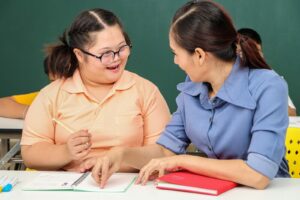
Different types of learning disability
There are different types of learning disabilities, which can be mild, moderate, severe or profound. In all cases a learning disability is lifelong.
It can be difficult to diagnose a mild learning disability as the individual will often mix well with others and will be able to cope with most everyday tasks. However, they may need support in other areas of their life such as filling out forms.
People with a severe learning disability or profound and multiple learning disabilities (PMLD), will need more care and support in areas such as mobility, personal care and communication. People with a moderate learning disability may also need support in these areas, but not definitely.
What can cause a learning disability?
A learning disability occurs when the brain is still developing (before, during or soon after birth). Several things can cause a learning disability.
Before birth things can happen to the central nervous system (the brain and spinal cord) that can cause a learning disability. A child can be born with a learning disability if the mother has an accident or illness while she is pregnant, or if the unborn baby develops certain genes.
Genes are chemicals in our bodies that contain information about us, like how we look.
A person can be born with a learning disability if he or she does not get enough oxygen during childbirth, has trauma to the head, or is born too early.
After birth, a learning disability can be caused by early childhood illnesses, accidents, and seizures.
For Example:
Let’s think about people with Down Syndrome (DS)
Down Syndrome is a genetic variation: everyone with DS has an additional chromosome in every cell in their body. That makes people with DS have some common features. But a physical likeness is just that: a physical likeness. It doesn’t mean that all people with those features are the same:
“Oh yeah – you know, people with curly hair, well.. they’re always so sweet natured…”
And don’t make that mistake of looking at the common features then ignoring the other things that make them unique: what they’ve learned from their family, their life experience and education, how they too are products of the society and culture they’ve grown up in.
What you WILL find are some common traits. And the same is true for people with DS,
Example:

George, can’t speak on behalf of everyone with DS, far less everyone with a learning disability. He can tell you about some of his jobs and what makes it possible for him to be in the workplace.
If you have met one person with a learning disability, then you have met one person with a learning disability – What works for one person will not work for everyone.
